Meltdown™

Meltdown™

Regular price $290.00 USD
Regular price Sale price $290.00 USD
Sale Sold out
$58.00/gal
Shipping calculated at checkout.
Package Type

View Tech Sheet

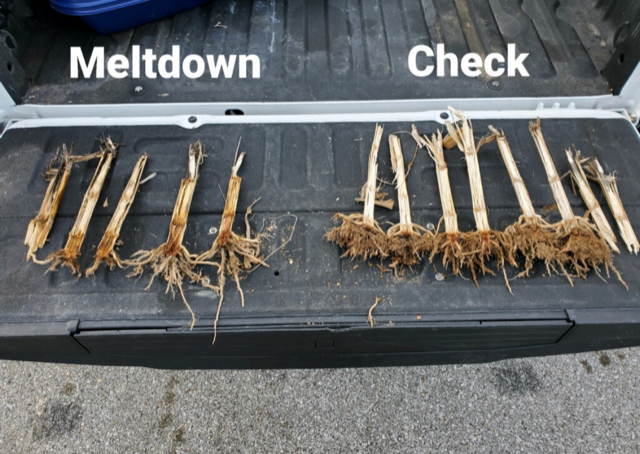
Meltdown™ is a broadcast-applied biological residue digester designed to break down crop stubble post-harvest or pre-plant.  Its microbial team releases phosphorus, potassium, carbon, and organic nitrogen back into the soil, accelerating nutrient cycling and enhancing soil health for future crops.

Active Ingredients:  Nitrogen (1%); Microbial Strains (4.9%); Fulvic Acids (0.04%); Humic Acids (0.01%) *See Label
Restricted Use Pesticide:  No
View full details

Why Growers Buy Through The Expect More Ag Network.

Farmers want competitive pricing without giving up local support. The Expect More Ag Network combines online convenience with Partner Locations that know your fields, your timing, and your pressures. You get transparent pricing, reliable fulfillment, and real people when you need them. It's the hybrid model agriculture has been missing.

Meltdown™ fits operations looking to break down heavy residue, unlock tied‑up nutrients, and improve soil conditions ahead of planting. It’s especially valuable in corn‑on‑corn acres, high‑yield systems with dense residue, and no‑till or reduced‑till environments where residue breakdown can lag behind crop demand.

By accelerating the decomposition of stalks, leaves, and root mass, Meltdown™ helps release nutrients trapped in last year’s residue and increases water‑extractable organic carbon (WEOC) — feeding the soil’s microbial engine. The result is a cleaner seedbed, improved nutrient availability, and a more efficient start for the next crop.

Whether you’re trying to reduce early‑season nitrogen tie‑up, improve planter performance, or get more value out of the nutrients already in your residue, Meltdown™ provides a biological foundation that strengthens your entire fertility program.

10 Years of Proven Data. Independent research showed up to a 64% increase in nutrient value (phosphorus and potassium) per acre in treated zones AND when compared to traditonal dry fertilizer, nutrient release and efficiency is up to 68% greater.

Meltdown can be applied post-harvest and pre-plant as a broadcast application at a 32oz/acre rate. For optimum conditions ensure air temperatures remain above 40°F for the first 48-72 hours post application.

Wait 72 hours post-application before performing any tillage.

Limit tillage depth to no more than 8" for 2 weeks after application.

Meltdown™ contains microbes specifically selected to break down cellulose, lignin, and chitin, some of the most valuable and complex forms of carbon in residue.

Total Nitrogen (N) — 1.0% (Soy Protein Hydrolysate) A gentle, organic nitrogen source that stimulates microbial activity and supports early decomposition. Derived from soy protein hydrolysate, it provides amino acids and peptides that feed beneficial microbes and help jump‑start residue breakdown.

Bacillus licheniformis produces enzymes that degrade complex organic materials, including proteins and polysaccharides. This strain accelerates residue decomposition and helps release nutrients tied up in crop residue and soil organic matter.

Bacillus subtilis. A resilient soil bacterium known for producing cellulase and protease enzymes. It enhances residue breakdown, supports nutrient mineralization, and promotes a balanced microbial environment that improves soil health and nutrient cycling.

Cellulomonas cellasea. Specialized in cellulose degradation — it breaks down tough plant fibers and stalk material. This activity frees carbon and nutrients locked in residue, improving soil structure and organic matter turnover.

Pseudomonas balearica. A versatile nutrient‑solubilizing bacterium that helps release bound phosphorus and micronutrients. It also contributes to nitrogen transformation processes, improving nutrient availability for the next crop.

Rhodopseudomonas palustris. A photosynthetic bacterium that plays a key role in nitrogen fixation and carbon cycling. It enhances soil microbial diversity, supports nutrient release under low‑oxygen conditions, and contributes to overall soil vitality.

Yarrowia lipolytica. A beneficial yeast that produces enzymes capable of breaking down lipids and complex organic compounds. It supports microbial synergy and helps convert residue into usable carbon sources for other soil organisms.

Fulvic Acids (Derived from Leonardite) — 0.04% Fulvic acids chelate nutrients and improve their mobility within the soil profile. They enhance microbial efficiency and nutrient uptake by plants, especially during early growth stages.

Humic Acids (Derived from Leonardite) — 0.01% Humic acids improve soil structure, water retention, and cation exchange capacity. They create a more favorable environment for microbial activity and nutrient release.

Meltdown™ delivers excellent tank‑mix compatibility when combined with other fall or spring burndown herbicides programs. For best performance, maintain spray water pH between 5.5–6.2. Store above freezing temperatures to protect product integrity. *To ensure tank mix compatibility we still recommend a jar test.

If you’d like to learn more about Meltdown™— including local success stories and how growers in your county are using it—reach out to your nearest Expect More Ag Network Partner Location. Local support is what sets our network apart.

The Expect More Ag Network Difference.

Crop Input decisions aren't made in the conference room — they're made in the cab, in the heat, with a crop on the line. The Expect More Ag Network was built to support real-world farming, not corporate cycles. We're a Southern Illinois network of locally operated Partner Locations that know your fields, your pressures, and your timelines.

Farmers are buying more inputs online every year — not because they want less support, but because they want reliable pricing, clear information, and zero runaround. We built our ecommerce platform to give you the convenience of online ordering with the accountability of a local partner.

This is what modern ag retail should look like: online when you want it, local when you need it.